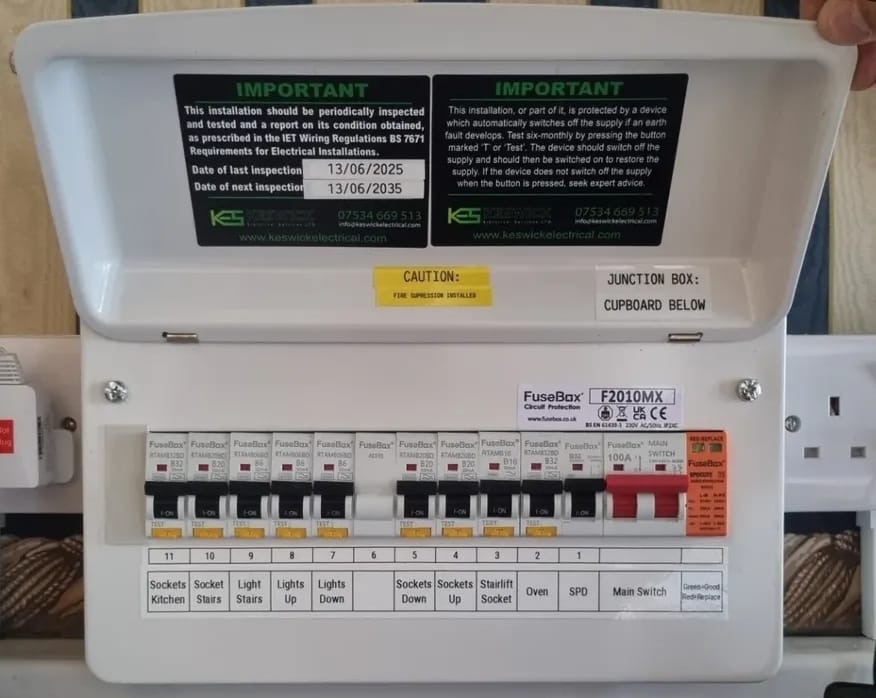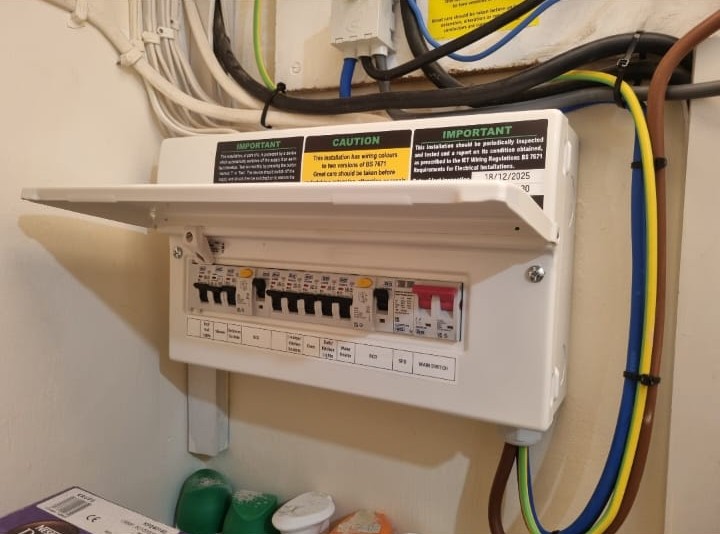
If you’ve ever looked at your fuse board (or “consumer unit” as we properly call it) and thought, “What on earth does that actually do?” — you’re not alone.
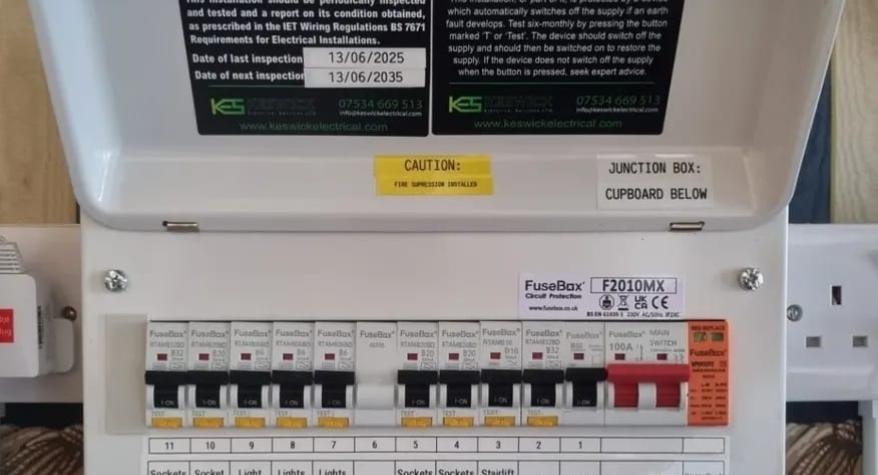
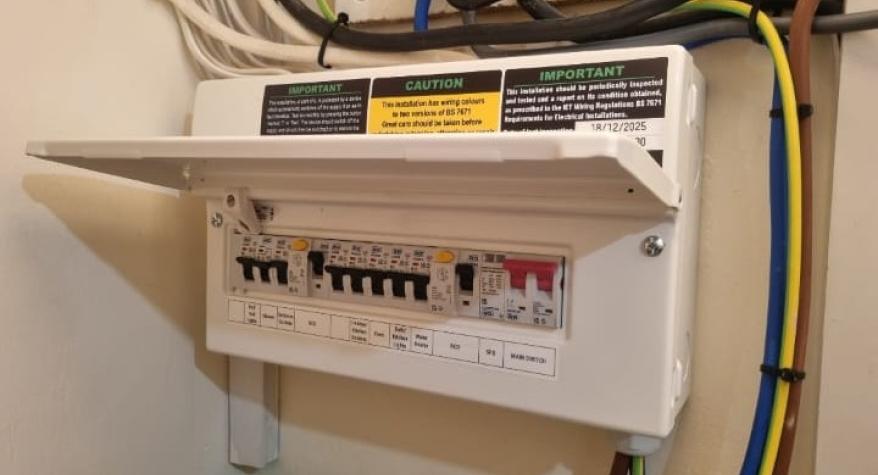
At Keswick Electrical Services Ltd, based in Bromley and proudly serving the South East and Kent, we’re often asked about the difference between an RCBO consumer unit and a Split Load RCD consumer unit. It’s an important question — especially if you’re upgrading your electrics or bringing your property in line with current regulations.
Let’s break it down in plain English.
First Things First – What Is a Consumer Unit?
Your consumer unit is the heart of your property’s electrical system. It distributes electricity to different circuits (lighting, sockets, cooker, shower, etc.) and provides protection to keep you and your home safe from electric shock and fire.
Modern consumer units must comply with the latest UK wiring regulations (BS 7671), which require enhanced protection — particularly RCD protection.
Now, here’s where RCBOs and Split Load RCD units come in.
What Is a Split Load RCD Consumer Unit?
A Split Load RCD consumer unit has:
- Two RCDs (Residual Current Devices)
- Multiple MCBs (Miniature Circuit Breakers) split across those RCDs
How it works
The circuits are divided into two “banks.”
Each bank is protected by one RCD.
If there’s a fault on a circuit, the RCD covering that group will trip — and everything connected to that side will lose power.
👍 Advantages
- Generally more affordable than full RCBO boards
- Still compliant with regulations in certain installations
- Suitable for some smaller or lower-risk properties
👎 Disadvantages
- Fault on one circuit can knock out multiple circuits
- Can be inconvenient (losing lights and sockets together)
- More fault-finding can be required
- Less individual circuit protection
Example: If your upstairs socket circuit develops a fault, you might also lose your lighting on that same RCD side.
Not ideal when it’s dark!
What Is an RCBO Consumer Unit?
An RCBO consumer unit takes things a step further.
Instead of grouping circuits under shared RCDs, each circuit has its own RCBO (Residual Current Breaker with Overcurrent protection).
Think of it as giving each circuit its own bodyguard.
How It Works
Every individual circuit has:
- Overcurrent protection (like an MCB)
- RCD protection (shock protection)
All built into one device.
If a fault occurs, only that specific circuit trips — nothing else.
👍 Advantages
- Faults are isolated to one circuit
- Much less disruption
- Easier fault diagnosis
- Increased safety
- Better compliance with modern best practice
- Ideal for homes with EV chargers, home offices, or high electrical demand
👎 Disadvantages
- Slightly higher upfront cost
- More components inside the board
However, most homeowners now choose RCBO boards because of the convenience and improved safety.
Which One Should You Choose?
There isn’t a one-size-fits-all answer.
It depends on:
- The size of your property
- Your electrical demand
- Whether you’re adding an EV charger, hot tub, or new kitchen
- Your budget
- Future-proofing plans
At Keswick Electrical Services Ltd, we’ll always recommend what’s safest, most practical, and best value long-term — not just the cheapest option today.
In many modern homes, an RCBO consumer unit is now considered best practice.
Consumer Unit Upgrades & Current Regulations
Electrical standards evolve to improve safety. Modern consumer units must:
- Be metal (fire-resistant enclosure)
- Include RCD protection
- Meet the latest BS 7671 wiring regulations
- Be correctly installed, tested and certified
Upgrading your consumer unit isn’t just about convenience — it’s about protecting your home and family.
How Keswick Electrical Services Ltd Can Help
We provide:
✔ Professional advice on the right consumer unit for your property
✔ Full consumer unit upgrades
✔ Electrical testing and certification
✔ Installation to current regulations
✔ Clean, tidy, professional workmanship
✔ Clear pricing with no surprises
Being based in Bromley and serving the South East and Kent, we understand the types of properties in the area — from period homes to modern builds — and tailor every installation accordingly.
We don’t just swap boards. We:
- Inspect your existing wiring
- Ensure earthing and bonding are correct
- Carry out full testing
- Issue certification
- Notify Building Control where required
- Most importantly — we explain everything clearly so you know exactly what you’re getting.
Thinking About an Upgrade?
If your consumer unit:
- Still has rewireable fuses
- Trips frequently
- Is over 20–25 years old
- Has no RCD protection
- Or you’re planning renovation works
It may be time to consider an upgrade.
We’re always happy to offer friendly, no-obligation advice.
Final Thoughts
Both Split Load RCD and RCBO consumer units provide protection — but the level of convenience and circuit separation differs significantly.
If you want modern safety, minimal disruption, and future-proofing, RCBO consumer units are often the preferred choice.
If you’d like expert advice from a trusted local electrician, Keswick Electrical Services Ltd is here to help.
Professional. Reliable. Friendly.
Serving Bromley, the South East and Kent.
Give us a call today or get in touch to enquire!